
Showing posts with label Rocket launcher. Show all posts
Showing posts with label Rocket launcher. Show all posts
Thursday, March 10, 2016
Monday, March 7, 2016

Tuesday, May 26, 2015
Panzerfaust & Faustpatrone
The Panzerfaust (lit. "armor fist" or "tank fist", plural: Panzerfäuste) was a cheap, single shot, recoilless German anti-tank weapon of World War II. It consisted of a small, disposable preloaded launch tube firing a high-explosive anti-tank warhead, and was operated by a single soldier. A similar but smaller weapon was named the Faustpatrone. The first generation Panzerfaust was in service from 1943 until the end of the war.


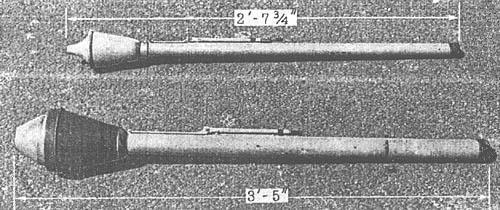 | ||
| Faustpatrone 30 (top) and Panzerfaust 60 (bottom) |
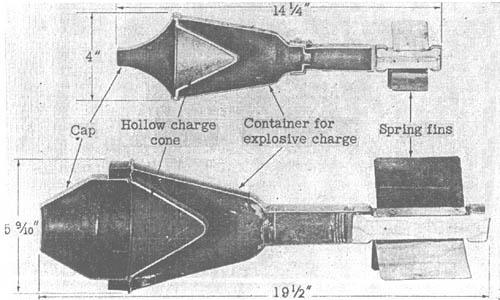 |
| Sectional view of Faustpatrone 30 (top) and Panzerfaust 60 (bottom) warheads, further cross sectional views for the Faustpatrone 30 and Panzerfaust 100, including the tube, are available. |
|
| Panzerfaust 60 (left) with Panzerschreck rocket (right) |
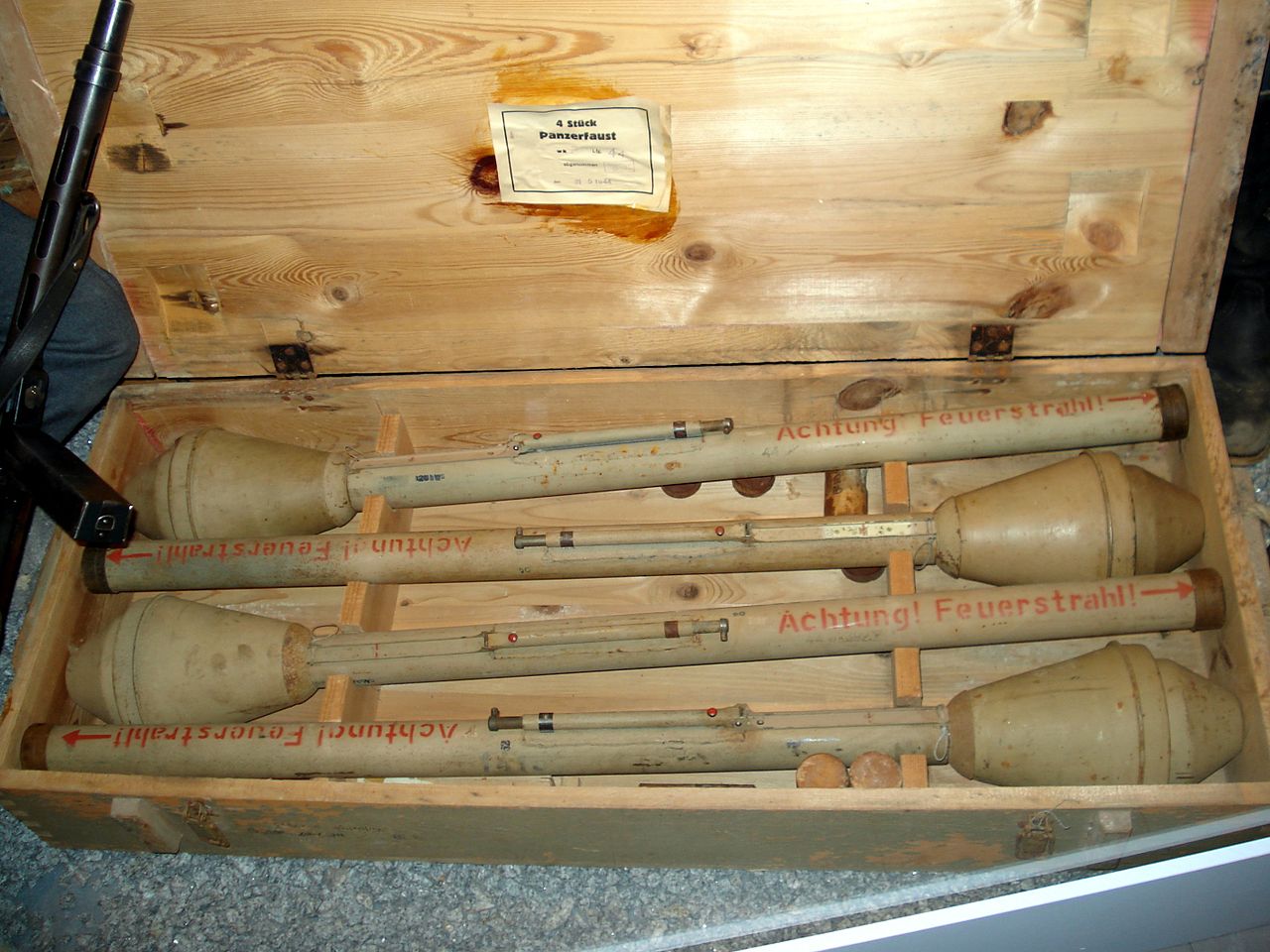 | |
| Four Panzerfaust 30s in original shipping crate, on display at the Helsinki Military Museum. |
 |
| Panzerfaust-armed Finnish soldiers (soldier in foreground is also armed with a Suomi KP/-31) passing the wreckage of a Soviet T-34 tank, destroyed by detonation, in the Battle of Tali-Ihantala. |

Friday, January 6, 2012
Various anti-tank rocket launcher systems
Panzerfaust 3
 |
| The Panzerfaust 3 has been modernized to defeat the latest in tank armor. |
The Panzerfaust 3 is a single-shot disposable anti-tank rocket launcher (only the sight and firing systems are reusable). It is designed to be a close range system to defeat heavy armor and to be used primarily in an urban warfare setting (where close range fighting is expected). No doubt the system itself stemmed from experience in fighting Soviet armored forces in the streets of Berlin during World War Two, with German and civilian forces being armed with the original Panzerfaust series of tank-busters.

Early design drawbacks included excessive weight for a single-man portable battlefield system (leading to the weapon being uncomfortably cumbersome) and jamming issues within the launcher's firing mechanism. In fact, one of the greatest design flaws was that the rocket itself was found not to penetrate the heaviest of armors as advertised, leading to a redesign of the entire system. The redesign also minimized the 'back blast' that occurred when the system was fired, making the system somewhat safer to be fired out from within close quarters.

A later model designated as the PzF 3-T was put into service with a few notable improvements on the original system including a dual hollow-charge warhead. This specialized warhead was developed exclusively to compete with the newer explosive reactive armor that made its appearance as optional add-ons to many tank systems.
The latest Panzerfaust 3 variant in service is designated the PzF 3-IT-600.
Specifications for the Dynamit-Nobel Panzerfaust 3
Operation:
Action: Spring Coil Mechanism Ignition
Cartridge: 90mm launcher
Feed System: 1 x 110mm rocket
Maximum / Effective Range: 1,640ft (500m; 547yds)
Dimensions:
Overall Length: 1200mm (47.24in)
AT4
 |
| The AT4 is the primary anti-armor weapon of the United States Army. |
The M136 AT4 is billed as the United States Army's primary light anti-tank weapon system available to infantry squads and is based on the original AT4 anti-tank shoulder-launched munition system. The system can be used by a single operator against armored targets posing a threat to the lively hood of the infantry squads. Essentially, the M136 AT4 operates as a recoilless rifle (as opposed to a guided missile launcher), allowing for high penetration of armored targets and fires a cartridge round measuring over half the length of the launching tube. When fired, the projectile sports spring loaded fins during flight.

The M136's cartridge round is an 84mm High-Explosive Anti-Tank munition with a rocket-type cartridge, fin stabilization and can achieve free flight once it leaves the launcher (not a wire-guided munition). The launcher itself is a single-piece tube system wrapped in fiberglass and is disposable after one shot.

The United States Army has since stopped purchases of the base AT4 anti-tank system in favor of the newer AT4-CS (Confined Space) implement. The AT4-CS is designated as the M136E1 and holds the advantage of being able to fire from confined areas such as inside of buildings, improving its reach in urban settings. The weapon has a listed effective range of 300 meters and weighs in at only 7.5 kilograms. The recoilless qualities of the M136 family allow for just about any trained operator to fire one and its rugged capabilities mean that the system can receive a great deal of in-the-field abuse and not reflect that in its performance.


Specifications for the FFV / Alliant TechSystems M136 AT4 Light Anti-Armor Weapon
Operation:
Action: Single-Shot, Self-Contained Recoilless Rifle
Cartridge: 84mm
Feed System: 1
Muzzle Velocity: 950ft/sec (290m/sec)
Maximum / Effective Range: 985ft (300m; 328yds)
Sights: Range Indicator Rear Sight
Dimensions:
Overall Length: 1020mm (40.16in)
Barrel Length: 1,020.00 (40.16in)
Empty Weight: 1.80kg (3.97lbs)
B-300
 |
| The B-300 maintains an advantage of needing only a single user to operate the weapon. |
The B-300 is an Israeli Military Industries product and is a man-portable anti-tank weapon system. It is designed to engage enemy tanks or fortified structures depending on the chosen warhead type (HEAT - High Explosive Anti-Tank round or HEFT - High Explosive Follow-Through). The Follow-Through round deals with fortifications in two stages, the first being the penetration phase. The second (i.e. the follow-through) phase, launches a secondary anti-personnel shaped charge into the structure. Design of the B-300 began in the 1970's with production running from 1980 through today.
The B-300 itself had origins in the French-produced STRIM anti-tank rocket launching system. This weapon replaced the American-made 3.5" Super Bazookas in service with the IDF. Review of Israeli Army experience in their 1973 conflict gave notice to the effectiveness of Soviet-produced RPG-7 systems in enemy hands. As such, a competing design by Israel was eventually ushered in, this becoming the B-300.
Physically, the B-300 follows conventional wisdom in design. A pistol grip is positioned slightly forward with the firing mechanism on a pistol grip and trigger assembly positioned near center of the firing tube. A folding bipod is positioned just aft of the pistol grip as is a retractable shoulder rest. Sights include integrated standard front and rear battle sights and a variable scope mounting. Scope types include the Starlight scope (via adapter) for night operations and Stadia Sighting Telescope with integrated Beta light for improved dawn/dusk efficiency.
The B-300 weighs in at 3.65 kilograms empty and at 8 kilograms loaded. The system is 1,440 millimeters in length and can fire 3 rounds per minute. Sights include the standard iron sights but this can be augmented with the use of telescopic sights and night vision scopes. Its ease of use allows various military components to utilize the weapon as needed - this includes airborne and mechanized infantrymen alike.
The B-300 won the US Marines competition trials to become the SMAW bunker buster weapon.
The B-300 has seen active combat use in the 1st and 2nd Intifadas as well as the 2006 Lebanon War.
Specifications for the IMI B-300
Operation:
Action: Not Applicable
Cartridge: 82mm
Feed System: 1
Cyclic Rate-of-Fire: 3rds/min
Maximum / Effective Range: 1,312ft (400m; 437yds)
Sights: Iron; Night Vision; Telescopic; Starlight; Sighting
Dimensions:
Overall Length: 1440mm (56.69in)
Barrel Length: 0.00 (0.00in)
Empty Weight: 3.65kg (8.05lbs)
M141
 |
| The M141 is commonly known as the SMAW-D and fills the role of bunker buster for the United States Army. |
The M141 (SMAW-D) was developed for the United States Army to fill the role of "bunker buster", though the system itself has proven to be most multi-purpose in nature, particularly in urban the urban warfare setting. The system is used for the destruction of masonry, wood and earthen structures as well as a general light-armored vehicle-stopper. The system has proven useful in the demolition of network caves throughout the mountainous terrains of Afghanistan.

The launcher is of an extending tube type with built-in optics. The rocket features folding spring-loaded fins for in-flight stabilization. Target ranges are within a 15-to-500 meter range. The projectile warhead is high-explosive.

The US Army designates the system as M141 or SMAW-D while the US Marine Corps use the SMAW (Shoulder-launched Multi-purpose Assault Weapon). Warheads featured in the projectiles of the two weapon systems are the same.

Specifications for the IMI M141 Bunker Defeat Munition (BDM) / SMAW-D
Operation:
Action: Disposable Shoulder-Launched Assault Weapon
Cartridge: 83mm
Feed System: 1
Cyclic Rate-of-Fire: 1rds/min
Maximum / Effective Range: 1,640ft (500m; 547yds)
Sights: Iron; Telescopic; Night Vision
Dimensions:
Overall Length: 826mm (32.52in)
Barrel Length: 826.00 (32.52in)
Empty Weight: 7.12kg (15.70lbs)
LRAC 89-F1
 |
| The LRAC system was a reusable shoulder-fired rocket launcher developed for the French Army. |
The LRAC 89-F1 was developed for the French Army to replace the aging M20A1 Super Bazooka rocket launcher. The M20A1 was an improved form of the World War 2-era American M1 Bazooka launcher and entered production in 1952. The LRAC 89-F1 was constructed out of plastic and fiberglass to promote a lighter carrying weight for those soldiers assigned to operate the system. A typical crew included two personnel, one to handle the launcher itself and the other to facilitate initial loading and subsequent reloading of the launch tube. The LRAC derived its designation from the name of "Lance-Roquettes AntiChar de 89mm modele F1" and was also known as the STRIM 89mm (based on the abbreviation of the name Societe Techique de Recherches Industrielles et Mechanique).
In the mid-1960s, the Societe Techique de Recherches Industrielles et Mechanique was contracted to find a suitable replacement for the outgoing M20A1 series and, in the early 1970s, delivered two viable candidates. The first was a recoilless rifle design known under the designation of ACL-APX with an 80mm projectile assisted in flight by rocket propulsion. The second became the LRAC 89-F1 of 89mm. After evaluation by the French Army, the more promising and cheaper-to-produce LRAC system came out ahead and was selected for procurement and serial production.
As its designation implies, the LRAC 89-F1 fired a rocket of 89mm caliber. Muzzle velocity was rated at 967 feet per second with an effective range within 500 meters and a maximum range out to 2,300 meters. Sighting was accomplished through use of an APX M290 scope and a passive night telescope sight were also available. The base penetration rocket was fin-stabilized (spring-loaded) while in flight and can pierce up to 400mm at a 0-degree angle and up to 110mm at 65-degrees. Broken down, the projectile featured an electric generator at its head followed by the cap and head with the fuse at the midway point. The projectile was then largely made up of the propulsion charge and finally ended with the exhaust nozzle. The launch tube contained the integrated sighting device, trigger mechanism and bipod. The rocket was not made active until the rear tube container was affixed to the launcher. Only then the rocket's propellant was not activated until after the rocket was fired. The rocket was then armed some 32 feet from the launch point.
Design of the base LRAC launcher was essentially a detailed tube. The tube was larger at the rear and tapered off to a consistent forward end. The main control components were held at the center of the tube and included a pistol grip type handle, a retractable forward hand grip and an adjustable ergonomically curved shoulder rest with twin feet (bipod). The sighting system was mounted near the pistol grip unit (or firing generator handle). A carrying handle was set to the right side of the tube body. The rear of the tube was capped by a removable plug and the front by a removable muzzle cover. A back sight notch was mounted atop the business end of the muzzle.
Beyond the base issue rocket, LRAC ammunition included an anti-personnel/anti-vehicle projectile (spraying out up to 1,600 high-speed, molded steel pellets), a pair of smoke projectile (35 second disbursement time in either liquid smoke/phosphorous head forms) and an illumination projectile that burned in air for up to 30 seconds at 300,000 candela power, settling to the ground by a small parachute.
The LRAC 89-F1 in French Army service has since been replaced by the AT4-CS (of Sweden) single-shot and the ERYX portable wire-guided anti-tank weapons. The LRAC does, however, continue service with other militaries around the world, thee being primarily former French colonies residing in Africa.
Specifications for the LRAC 89-F1 (Lance-Roquettes AntiChar de 89mm modele F1)
Operation:
Action: Propellant-Based, Shoulder-Fired
Cartridge: 89mm
Feed System: 1
Cyclic Rate-of-Fire: 3rds/min
Maximum / Effective Range: 1,969ft (600m; 656yds)
Sights: APX M290 / Passive Night Optics
Dimensions:
Overall Length: 1170mm (46.06in)
Barrel Length: 0.00 (0.00in)
Empty Weight: 5.50kg (12.13lbs)
M1
The American Bazooka was a successful - albeit simplistic - anti-armor developed as early as 1933, though not fielded until 1942. The system consisted of a basic tube, wiring and a pistol grip, fore grip and shoulder rest (all three usually of wood) with the rocket loaded from the open rear. While the primary weapons handler aimed and fired the system, a secondary member was charged with connecting the ignition wiring at rear.

The Bazooka series was first used in the desert campaign of North Africa against Axis tanks. The initial Bazooka system, the M1 and the equally similar M1A1, were designed to fire the penetrating M6A3 rocket round or the practice M7A3 rocket round for training. The M1A1 took over the M1's role shortly after the M1 entered service. Later improved Bazooka models would also fire incendiary and smoke rounds (the Bazooka M9). In some cases, a wire mesh was fitted to the firing end of the launch tube as often times not all of the propellant would be consumed during ignition, spraying the remaining propellant into the face of the firer.

Though often thought of for its anti-tank capabilities, the Bazooka was equally adept at taking out dug in enemy and their surrounding installations not to mention obstacles. Though the effective range of the system was listed at about 300 yards, usage of the Bazooka was usually kept around or under 100 yards to increase accuracy.

The lethality and effectiveness of such a cheap system to produce enlightened the Germans to use the M1 as the basis for their own Bazooka-type system, becoming the large caliber Raketenpanzerbusche. Despite this, the American Bazooka enjoyed more acclaim than any other shoulder-fired rocket system of the war, accounting for over 15 million rockets produced with some 475,000 Bazooka launcher systems in circulation.

The success of the M1 and the improved M1A1 led to the M9, basically a Bazooka launcher that could break down into a more portable two-piece system for easier carrying. The ultimate Bazooka evolution became the M18, seeing introduction at war's end. These later Bazooka systems saw almost exclusive use in the Pacific Theater.

Specifications for the M1 (Bazooka)
Operation:
Action: Electrically-Fired Single-Shot Launcher
Cartridge: 60mm
Feed System: 1
Muzzle Velocity: 270ft/sec (82m/sec)
Dimensions:
Overall Length: 1390mm (54.72in)
Barrel Length: 0.00 (0.00in)
Empty Weight: 6.01kg (13.25lbs)
Tuesday, September 28, 2010
RShG-2 assault disposable grenade launcher / rocket-propelled grenade

Picture: RShG-2 rocket-propelled assault grenade (at the bottom the container is cut out to show the rocket and its warhead)
Caliber: 72.5 mm
Type: rocket
Overall length: 770 mm
Weight: 3.8 kg complete
Effective range: up to 115 m
The RShG-2 rocket-propelled assault grenade is a derivative of the RPG-26 anti-tank rocket grenade, with only differences being the warhead and re-graduated sights. Instead of the HEAT warhead as in RPG-26, the RShG-2 carries a Fuel-Air Explosive (thermobaric warhead in Russian nomenclature, as its primary kill effect is achieved by high temperature and blast pressure wave) warhead which is intended against soft skinned and lightly armored vehicles, buildings, military installations and enemy personnel in defilade or in the open. It was adopted by Russian army in around 2000, and is issued to Russian troops as an infantry support weapon, and also offered for export.
The RShG-2 is a disposable, single shot rocket launcher pre-loaded with fin-stabilized rocket. The single-piece smoothbore barrel / container is made of fiberglass. The rocket is contained in the barrel tube, and its solid-fuel motor burns out completely within the barrel. Because the barrel is open at the rear to avoid recoil, there is a dangerous backblast area behind the firing weapon. In transport/storage mode both ends of the barrel are closed by the front and rear covers, made of rubber; those covers shall not be removed manually and are destroyed during the rocket launch. Firing mechanism is cocked manually by rising the rear sight; lowering the rear sight de-cocks the firing mechanism so the grenade can be brought back to safe mode if the there's no immediate target. The rocket is fin-stabilized (with four switch-blade like fins at the rear), and its solid-propellant motor burns out completely while rocket is still in the barrel. The thermobaric / FAE warhead contains 1.16 kg of explosive fuel, which roughly equals in blast effect to 3 kg of TNT explosive. FAE blast radius is about 1 meter.
Thursday, September 23, 2010
RMG multipurpose disposable grenade launcher / rocket-propelled grenade
MORE?

Picture 1: RMG rocket-propelled multipurpose grenade
Caliber: 105 mm
Type: rocket
Overall length: 1000 mm
Weight: 8.5 kg complete
Effective range: up to 130 m
Armour penetration: ~ 120 mm
The RMG rocket-propelled multipurpose grenade is a derivative of the RShG-1 assault rocket grenade. Its main purpose is to serve as a bunker-buster, to defeat enemy personnel behind light armor, walls and other protective means, as well as to destroy lightly armored vehicles and other military equipments. It was adopted by Russian army in 2001, and is issued to Russian troops as an infantry support weapon, and also offered for export.
The RMG is a disposable, single shot rocket launcher pre-loaded with fin-stabilized rocket. The single-piece smoothbore barrel / container is made of fiberglass. The rocket is contained in the barrel tube, and its solid-fuel motor burns out completely within the barrel. Because the barrel is open at the rear to avoid recoil, there is a dangerous backblast area behind the firing weapon. In transport/storage mode both ends of the barrel are closed by the front and rear covers, made of rubber; those covers shall not be removed manually and are destroyed during the rocket launch. Firing mechanism is cocked manually by rising the rear sight; lowering the rear sight de-cocks the firing mechanism so the grenade can be brought back to safe mode if the there's no immediate target. The rocket is fin-stabilized (with six switch-blade like fins at the rear), and its solid-propellant motor burns out completely while rocket is still in the barrel. The tandem warhead consists of a small-caliber leading HEAT warhead and a follow-through thermobaric / FAE (Fuel-Air Explosive) warhead, which explodes inside the target to achieve maximum damage effect.
Wednesday, September 22, 2010
RPO-A "Shmel" disposable thermobaric grenade launcher / rocket-propelled flame-thrower
MORE?


Picture 2: RPO-A rocket-propelled flame-thrower, in ready to fire configuration, with FAE rocket shown next to it
Caliber: 93 mm
Overall length: 920 mm
Weight: 12 kg complete
Effective range: up to 200 m (1000m maximum)
Overall length: 920 mm
Weight: 12 kg complete
Effective range: up to 200 m (1000m maximum)
Development of the singe-shot, disposable grenade launcher for Soviet army, which fired incendiary, thermobaric / FAE (Fuel-Air Explosive) or smoke rockets was initiated in 1984. The resulting weapon, known as "Schmel" (bumblebee) was adopted by Soviet army in 1988 in three versions - RPO-A with thermobaric / FAE warhead, RPO-Z with incendiary warhead and RPO-D with smoke warhead. Since the weapon is officially classified as flamethrower, per Soviet / Russian TOE it is used by Chemical troops (regardless of actual version), and usually is not issued to ordinary infantry. It is also in limited use by various Special Operations forces, including Russian Internal Affairs Ministry troops. The RPO-A version is considered as main in the whole line-up and is still in production for Russian army and export.
The RPO-A is a single-shot recoilless weapon of somewhat unusual construction. It has a fiberglass smoothbore barrel which is factory pre-loaded with a round of ammunition, which, in turn, consists of a missile with warhead and tail fins, and propelling charge. Upon firing, the propelling charge, which is loaded into separate case, is fired; it stays in the barrel while powder gases accelerate the missile; when missile has left the barrel, the propelling charge is expelled to the rear by the residual pressure, and falls to the ground at several meters behind the weapon. Obviously, this weapon creates a dangerous back-blast when fired. The basic controls include dual folding grips and rifle-type trigger with manual safety. Rear sight is of diopter type, with several apertures for different ranges. It is installed on the folding base; front sight is fixed. The missile is nothing more than a thin-walled container loaded with Fuel-Air Explosive (RPO-A), smoke composition (RPO-D) or Incendiary composition (RPO-Z), with four folding fins at the base. The blast effect of the thermobaric / FAE RPO-A warhead, which contains about 2.2 kg of Fuel-Air Explosive is roughly equivalent to the blast effect of the 107mm / 4" HE artillery shell. Upon explosion, RPO-A warhead generates the cloud of high-temperature flame (blast) which is about 6-7 meters in diameter (blast radius 3 meters or more). The blast cloud lasts as long as 0.4 seconds, thus allowing for significant incendiary effect in addition to the massive pressure wave (typical HE explosion lasts much shorter).
Tuesday, September 21, 2010
RPO-M / RPO PDM-A "Shmel-M" thermobaric grenade launcher / rocket-propelled flame-thrower
MORE?

RPO-M thermobaric grenade launcher / rocket-propelled flame-thrower, complete weapon (top) and FAE rocket (bottom)
Overall length: 940 mm
Weight: 8.8 kg complete
Effective range: up to 300 m (1700 m maximum)
The RPO-M rocket-propelled flame-thrower is a recent development by the KBP Instrument Design Bureau, and is an improved version of the well-known RPO-A weapon, which was developed by same organization. RPO-M, also known as RPO PDM-A "Shmel-M", is adopted by Russian army and offered for export. It is significantly lighter than RPO-A, has better ergonomics and improved ballistics and terminal effect. It is also more accurate, thanks to the optical sight, integrated into the re-usable fire control unit.
The RPO-M consists of a disposable launching tube / barrel, pre-loaded at the factory with rocket, and a reusable firing control unit, which is attached to the launching tube before use. Once the rocket is fired, empty launcher tube is detached from firing control unit and discarded. The launcher tube is made from fiberglass, with protective rubber covers at both ends. Covers are destroyed automatically when rocket is fired. The firing control unit is made mostly from plastic, and consists of a pistol grip, electronic trigger (ignition electrical impulse is generated by the pull of the trigger) and manual safety mechanisms, and short forend. On the left side of the firing control module there's a folding base that hosts an optical sight, and an additional rail for attachment of an IR / Night sighting equipment. The rocket consists of an solid-propellant engine, folding tail fins and a large thermobaric warhead, loaded with Fuel-Air Explosive. The blast effect of the RPO-M warhead is said to be comparable with that of the 155mm / 6" HE artillery shell.
Thursday, July 15, 2010
Me 163 Komet (Video & feature) - the world's first roket fighter plane
The Me 163 Komet was perhaps the most unique aircraft design of the Second World War. German scientists, always on the cutting edge of evolving war technology, developed a rocket-powered aircraft based on testing completed with an engine-less glider design. The resulting research produced the one-man, swept back fighter that was equally dangerous to pilot and Allied bomber formations alike.
I have posted something on the Komet a few year ago. Please click on the link below to get the see the full write-up as well as a video.
ME 163 Komet
NANG THIS POST, NANG THIS POST, NANG THIS POST
I have posted something on the Komet a few year ago. Please click on the link below to get the see the full write-up as well as a video.
ME 163 Komet
NANG THIS POST, NANG THIS POST, NANG THIS POST
Monday, May 17, 2010
Mark 153 (Mk.153) SMAW rocket launcher (USA)
The SMAW (Shoulder-launched Multi-purpose Assault Weapon) has been developed by early 1980s by McDonnel Douglas corporation especially for US Marine Corps (USMC), which required lightweight, one-man portable multipurpose weapon, capable to defeat light armor, enemy bunkers and other reinforced positions. Currently manufactured in USA by Talley Defence Systems, the SMAW is in service with USMC since 1984. Known in service as Mark 153 Model 0 (Mk.153 Mod. 0) SMAW rocket launcher, it can fire a variety of ammunition, intended against light armor such as armored personnel carriers, enemy bunkers etc.
 SMAW launcher in ready to fire configuration, with HEDP rocket in canister attached to the launcher

SMAW rockets and loading canisters (containers): left HEDP (dual purpose), right HEAA (anti-armor)
 SMAW launcher in action. The barrel and mechanism of spotting rifle are clearly visible, attached to the right side of the launcher.
 SMAW 9x51mm Mark 217 Mod 0 spotting rifle cartridge


SMAW rockets and loading canisters (containers): left HEDP (dual purpose), right HEAA (anti-armor)


Caliber: 83 mm rocket + 9mm spotting rifle
Type: rocket
Overall length: 825 mm (launcher), about 1370 mm (ready to fire w. HEDP round)
Weight: 7.52 kg unloaded launcher plus 4.3 to 6.9kg rocket in canister.
Effective range: up to 250 m (500m max)
Armor penetration: HEAA ~ 580-600mm (23-24") RHA; HEDP 25mm (1") RHA or 30cm (12") brick wall or 20cm (8") concrete wall
Type: rocket
Overall length: 825 mm (launcher), about 1370 mm (ready to fire w. HEDP round)
Weight: 7.52 kg unloaded launcher plus 4.3 to 6.9kg rocket in canister.
Effective range: up to 250 m (500m max)
Armor penetration: HEAA ~ 580-600mm (23-24") RHA; HEDP 25mm (1") RHA or 30cm (12") brick wall or 20cm (8") concrete wall
SMAW is a shoulder-fired, reusable rocket launcher that consists of a launch tube made of epoxy and fiberglass, with attached firing unit, 9mm spotting rifle, and sight bracket. Firing unit has dual grips, manual safety, and fire selector that allows to fire either a spotting rifle or a loaded rocket. Spotting rifle is is ballistically matched to all rockets. It is loaded with special ammunition and fires from special 6-round magazines. Spare magazines are clipped to each rocket container. Once operator roughly aimed the unit, using either telescope or night sight, or backup open sight, he starts to fire spotting rifle until rounds are hitting the intended target. 9mm bullets provide a visible trace up to 500m range, so operator can check his aim, and once on target, he then switches to rocket and launches it. SMAW launcher can be fired from the shoulder, using dual grips and shoulder rest, or from the ground, using folding bipods located near the center of mass, next to the shoulder rest.
All types of rockets are supplied in disposable, sealed plastic containers, which are clipped to the rear part of the launcher. Once rocket is fired, empty container is detached from the launcher and discarded. Rockets have caliber of 83mm, and are stabilized in flight using spring-open switchblade-type stabilizations. Standard types of rockets are: Mk.3 HEDP (High Explosive Dual Purpose) weighting 4.35kg (5.9kg in container), Mk.6 HEAA (High Explosive Anti Armor) weighting 4.4kg (6.2kg in container), CPR (Common Practice - training), FTG (Follow-Through Grenade with dual warhead - first that penetrates barrier, and second that follows through the hole and explodes inside) weighting 5.2kg (7.1kg in container), and CS (Confined Space with HEDP warhead - creates no backblast and can be fired from confined spaces such as rooms in building) weighting 6.9kg (9.1kg in container). The most recent (2003) addition to the range of SMAW rounds is Mk.80 rocket, known as NE (Novel Explosive, basically a thermobaric HEDP warhead).
It is worth to note that both self-loading (semiautomatic) Spotting Rifle and a 9x51mm spotting ammunition were developed in UK by Royal Ordnance.
Subscribe to:
Posts (Atom)
LinkWithin
